|
As a core climbing component for underground shafts, the key safety design challenge of manhole steps lies in balancing "anti-slip performance" and "load-bearing capacity" — it is necessary to enhance surface friction to prevent falls through structural modifications, while ensuring sufficient structural strength to adapt to working conditions such as frequent stepping and personnel loading. The logic for achieving this balance can be elaborated from three aspects: design principles, technical solutions, and specification standards.
I. Core Design Logic: Inherent Unity of Anti-Slip Performance and Load-Bearing Capacity
The essence of anti-slip design is to increase contact surface friction by modifying the surface morphology of the steps; the core of load-bearing design is to disperse forces and enhance structural rigidity through material selection and cross-sectional design to transmit loads. The common principle uniting the two is that surface anti-slip structures should not compromise the main load-bearing performance. Additionally, structural reinforcement designs must allow adequate space for anti-slip functions to prevent safety hazards from prioritizing one performance over others.
II. Key Technical Solutions for Balancing Anti-Slip Performance and Load-Bearing Capacity
1. Surface Anti-Slip Design: "Friction Enhancement" Without Damaging Load-Bearing Structures
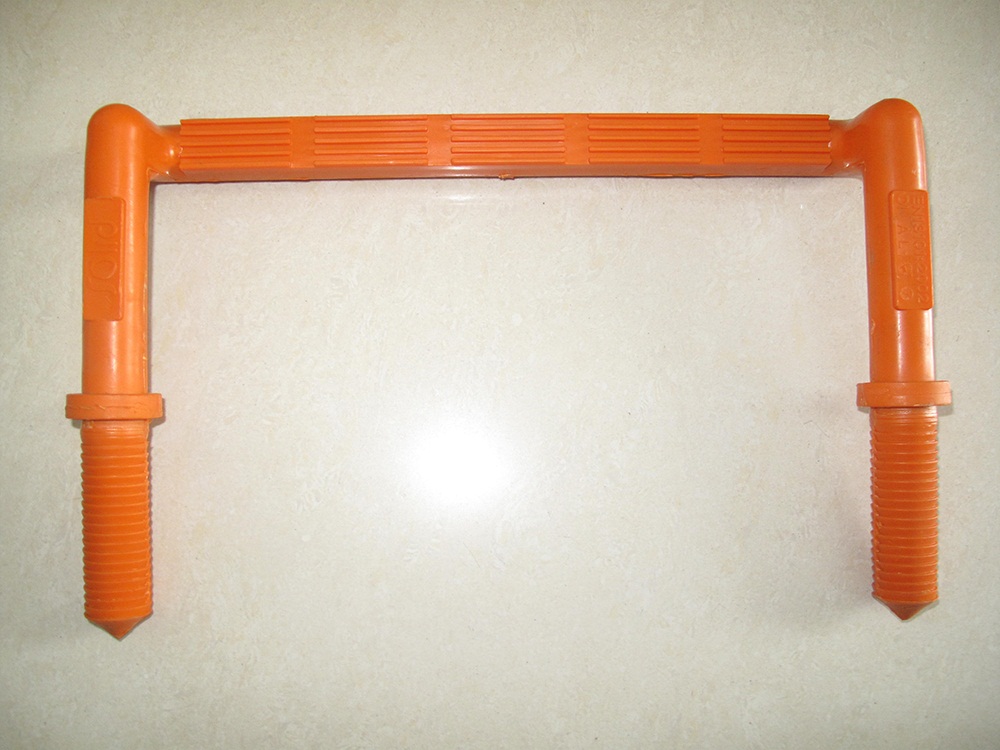
Groove Design (Mainstream Solution): Process evenly distributed anti-slip grooves on the stepping surface, preferably adopting a combination of "transverse stripes + dot protrusions" — transverse stripes align with the force direction of the sole to disperse vertical loads; dot protrusions increase local friction, with rounded transitions at the roots of the protrusions to avoid stress concentration. Avoid overly deep hollow or longitudinal grooves, which can accumulate sediment and reduce anti-slip effectiveness while weakening the main thickness of the steps.
Material-Assisted Anti-Slip: Conduct secondary processing on the surface of cast iron/stainless steel manhole steps, such as hot-dip galvanizing or spraying anti-slip coatings. Control the coating thickness within a reasonable range to avoid affecting the original load-bearing cross-section of the steps while improving the anti-slip coefficient in both dry and wet environments.
2. Load-Bearing Structure Design: "Strength Guarantee" for Anti-Slip Functions
Material Selection: Prioritize ductile iron or stainless steel. Ductile iron meets the required tensile strength and elongation, enabling it to bear the weight of adults and be integrally formed with anti-slip grooves through casting; stainless steel is suitable for corrosive environments, with anti-slip structures processed by stamping to avoid strength loss caused by welding.
Cross-Section and Installation Design: Adopt a "T-shaped/I-shaped" cross-section for the main body of the steps, with a stepping surface of reasonable width. Ensure the thickness of the load-bearing ribs meets standards, and design the connection end with the shaft wall as an "L-shaped" anchoring structure — either embedded sufficiently deep into the shaft wall concrete or fixed with expansion bolts to ensure uniform load transmission to the shaft body and prevent fracture at the root of the steps.
III. Specification Standards and Verification: "Baseline Requirements" for Ensuring Balance
Anti-Slip Performance Verification: Conduct anti-slip coefficient tests in accordance with relevant technical requirements to ensure compliance in both dry and wet environments; simulate harsh working conditions to test the anti-clogging ability of the grooves, avoiding loss of anti-slip function due to debris accumulation.
Load-Bearing Performance Verification: Perform static load tests to control the permanent deformation of steps within a reasonable range; conduct fatigue tests to ensure no cracks or fractures occur; carry out pull-out tests on connection parts to ensure anchoring strength meets standards and prevent load-bearing failure caused by loose installation.
Scenario-Adapted Adjustments: For municipal road shafts, prioritize anti-slip performance in wet environments, adopting a combination of "grooves + galvanizing"; for industrial shafts, focus on corrosion resistance and heavy-load capacity, selecting stainless steel materials and thickened cross-sections; for deep shafts, add transverse connecting rods to steps to disperse single-sided forces while retaining surface anti-slip grooves.
In summary, balancing anti-slip performance and load-bearing capacity for manhole steps essentially combines "refined surface functions" with "standardized structural strength" — through scientific groove, material, and cross-sectional design, anti-slip structures become "auxiliary value-added features" rather than "detrimental factors" for load-bearing performance, ultimately achieving dual guarantees of "climbing safety" and "service durability".
|